

Greene County, Ohio — For more than a year, citizen journalist Tom Stafford has pursued a mission that many would have abandoned long ago.
Driven by patriotism, a commitment to America’s veterans, and a belief that government must remain accountable to the people it serves, Stafford embarked on what became a year-long investigation into the operations, finances, and transparency practices surrounding the Greene County Veterans Service Commission.
What began as a search for answers evolved into a comprehensive public-records investigation involving financial records, budget amendments, county resolutions, expenditure reports, public meetings, and correspondence with government officials. Through persistence and the lawful use of Ohio’s public-records laws, Stafford sought to answer a question shared by veterans and taxpayers alike:
Are funds collected in the name of veterans being managed in a way that best serves veterans?
The records obtained raised significant questions.
Among the findings documented in public records were instances in which funds originally appropriated for direct veteran assistance were later transferred to operational and administrative expenses. Records reviewed during the investigation identified expenditures including approximately $10,090.75 for carpet replacement, more than $10,875.42 for television advertising, $1,580 for billboard advertising, newspaper advertising expenses, radio advertising purchases, telecommunications costs, employee health insurance, life insurance, and salary-related expenditures.
The investigation also identified a December 2022 transfer of more than $19,000 into a dedicated employee bonus account. Questions regarding the recipients and distribution of those bonus funds remained subjects of public inquiry.
For many veterans and taxpayers, these findings prompted a simple question:
Should direct assistance to veterans remain the highest priority when funds collected on behalf of veterans are allocated?
As Stafford continued pursuing records and answers, the investigation grew beyond budgets and accounting entries.
Veterans and community members began sharing concerns about their experiences interacting with the system. Some reported feeling discouraged from speaking publicly about their concerns. Others expressed reluctance to testify or attend meetings because they feared criticism, confrontation, or negative consequences for challenging government decisions.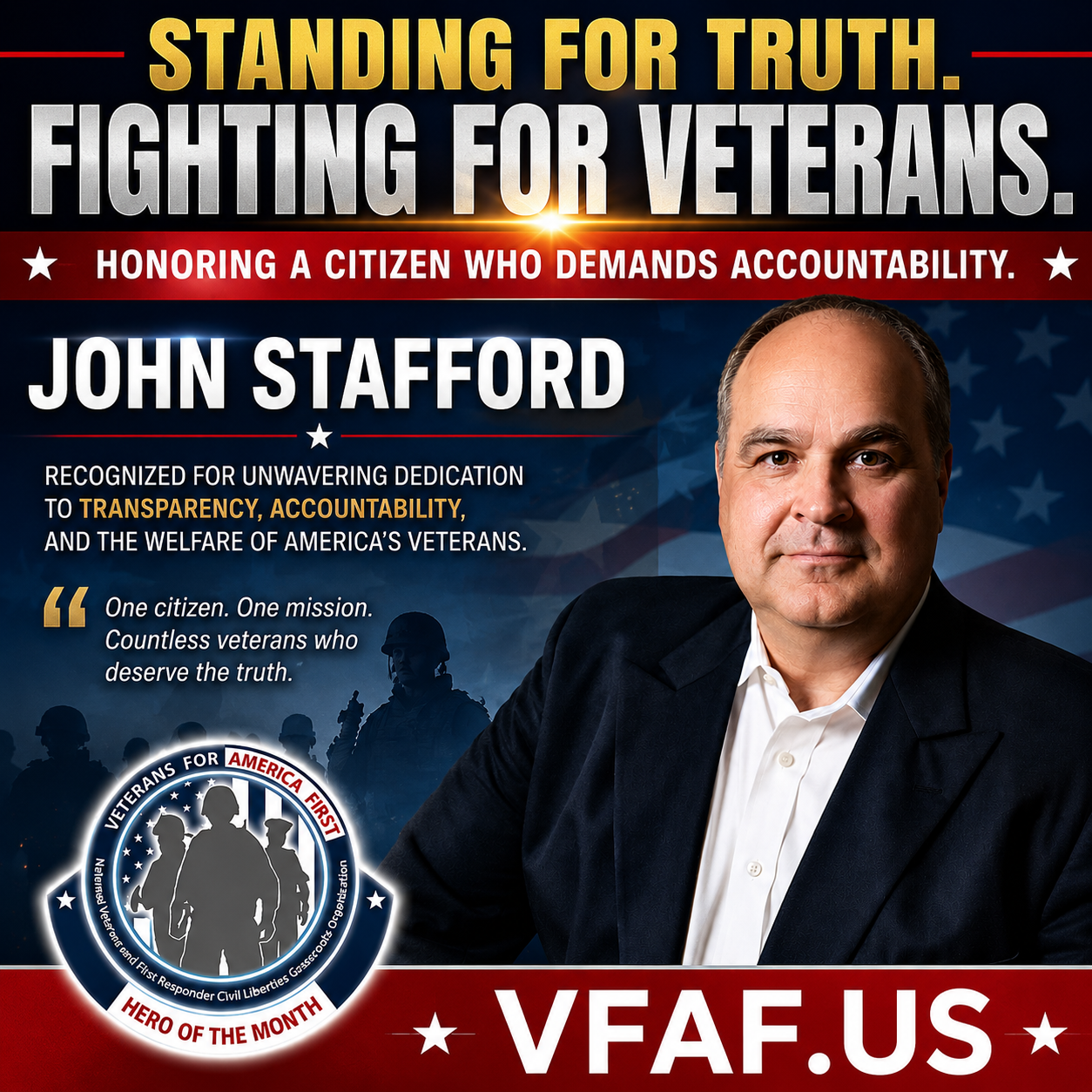
One veteran reportedly expressed concern after being told his disability rating was “fine as it is” and would not return to the Veterans service office for much needed help. The veteran questioned how such a conclusion could be reached without a comprehensive medical review and felt his concerns were dismissed before receiving proper consideration. While medical determinations ultimately belong to qualified healthcare professionals and the Department of Veterans Affairs, experiences such as these contributed to broader concerns among some veterans that their voices were not always being fully heard.
Supporters of the investigation point to multiple incidents in which law enforcement became involved during disputes surrounding public meetings and government accountability. According to those supporters, citizen journalist Tom Stafford was removed from meetings after raising questions regarding veteran services, public expenditures, and government transparency.
They also cite an incident in which multiple law enforcement vehicles reportedly responded to Stafford’s residence in connection with this recent service of a new stunt buy Huddleson. To Stafford’s supporters, these events have become symbolic of what they view as an increasingly adversarial relationship between citizens seeking answers and government officials responding to criticism.
Supporters argue that such actions can have a chilling effect on public participation, particularly among veterans and citizens who may already feel hesitant to speak publicly. Several veterans involved in the discussions expressed concern that challenging public officials could result in unwanted scrutiny, confrontation, or retaliation, whether intended or not.
Critics of the government’s response maintain that transparency is best served when citizens feel free to ask questions, attend meetings, submit records requests, and participate in public debate without fear of becoming the focus of official action.
Supporters also questioned whether government legal resources were being used primarily to address citizens’ concerns or to defend government actions from scrutiny. Whether those perceptions are accurate or not, many believe the resulting atmosphere has contributed to growing public distrust and calls for greater accountability.
Concerns intensified during Memorial Day weekend when community members reported being prevented from participating in activities they viewed as patriotic expressions of civic unity, including the singing of the National Anthem. For many veterans, Memorial Day is among the most sacred observances in American life, making the controversy especially emotional and symbolic.
For Stafford, however, the mission remained unchanged.
Follow the records.
Follow the facts.
Ask the questions.
Let the public decide.
“This is not about politics,” said Kimberly Taiko Moyers, Veterans for America First National Vet Force Director and Texas Vice President.
“This is about accountability. Veterans deserve answers. Taxpayers deserve transparency. Citizens should never feel discouraged from asking questions about the stewardship of public resources. Transparency protects veterans, taxpayers, and honest public officials alike.”
Supporters say Stafford’s work embodies one of the most important traditions in American democracy: citizens using lawful means to seek answers from government and ensure public institutions remain accountable to the people they serve.
Throughout the investigation, Stafford faced criticism, controversy, and obstacles that would have caused many to walk away. Yet he continued reviewing documents, filing records requests, attending meetings, and seeking answers on behalf of veterans who felt their concerns were not being heard.
When others chose silence, he chose action.
When others accepted incomplete answers, he continued asking questions.
When others stepped back, he stepped forward.
For many of Stafford’s supporters, this is precisely why his work matters. They believe he continued asking questions when others felt unable or unwilling to do so. In their view, Stafford became a voice for veterans who feared speaking publicly and a watchdog for taxpayers seeking accountability.
Veterans for America First Hero of the Month!
For his perseverance, patriotism, courage, and unwavering commitment to transparency, Veterans for America First proudly recognizes Tom Stafford as its Hero of the Month.
For more than a year, Stafford invested countless hours pursuing public records, researching financial documents, examining government actions, and bringing issues affecting veterans to public attention.
His work serves as a reminder that accountability requires participation, transparency requires vigilance, and freedom depends upon citizens willing to stand in the gap for others.
Tom Stafford’s year-long pursuit of answers demonstrates that one citizen, armed with determination, integrity, and a commitment to truth, can still make a difference.
And for the veterans whose voices may otherwise go unheard, that difference matters.
MEDIA CONTACT
Kimberly Taiko Moyers
Veterans for America First National Vet Force Director
Veterans for America First Texas Vice President
USN Retired
Kim@projectdefiant.com
